Armyworms in Georgia Turfgrass
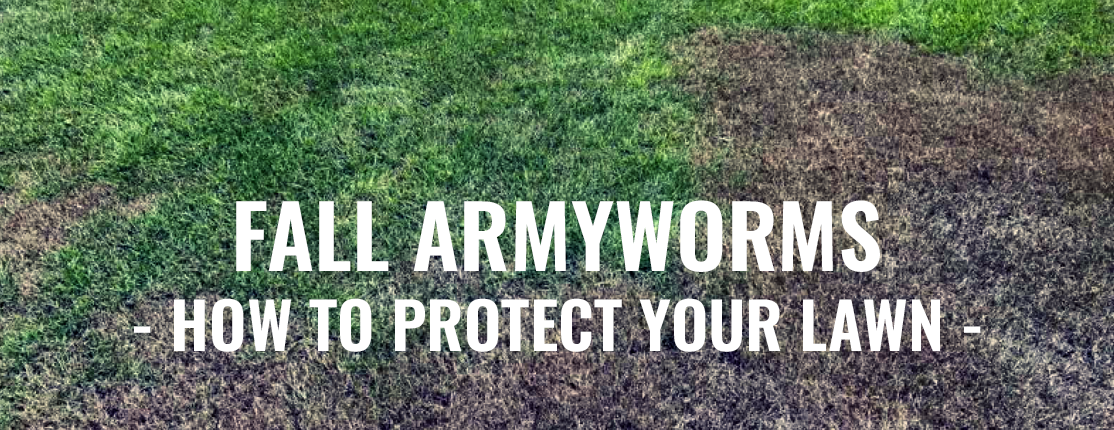
FALL ARMYWORMS ARE ON THE MARCH IN GEORGIA AND
CAN CAUSE MAJOR DAMAGE TO YOUR LAWN
Caring for the health of your lawn begins with learning about common pests and how to spot an infestation in your turfgrass, and because fall armyworms can severely damage your lawn in only a few days, it's important to know what to look for. Fall armyworms cause damage by consuming the foliage of your lawn, and because they cross the turf surface as a group, they create a noticeable line between damaged and undamaged turfgrass. You may first notice their presence when a brown patch of grass gets larger each day. Or they can be very aggressive and you'll find your lawn with no grass and only dirt after only a day or two. This is why it's important to identify an infestation and treat your turfgrass quickly.
A BRIEF HISTORY
Many people are unfamiliar with armyworms, but because of the particularly bad infestation in 2021, they have become more well-known to homeowners. Early accounts of armyworm damage date back to the late 1800s, with reports of severe damage to crops like winter wheat and corn, and in recent years, there have been significant outbreaks in the southeast, with some years seeing infestations as severe as those in the 1970s.
WHAT ARE FALL ARMYWORMS?
Fall armyworms are the larvae of a small brownish-gray moth. Their scientific name is
Spodoptera frugiperda. They plague many crops, but prefer most grasses, including coastal bermudagrass, fescue, ryegrass, bluegrass, Johnsongrass, timothy, corn, sorghum, and Sudangrass—even small grain crops are subject to infestation. Armyworms don’t care for Zoysia. In hot, dry weather, the moths and caterpillars really like lawns in the southeast, including Georgia, and can be found as far north as North Carolina and Tennessee. They are a subtropical moth that migrates north from the Gulf Coast and tropics, and are not indigenous to our area and cannot overwinter here. Their arrival in Georgia occurs in the spring or early summer, and are noticeable in turfgrass in early July. The exact timing of their arrival in Georgia is subject to weather conditions and varies every year, so it's important to be on alert for fall armyworm activity from July until the first frost.
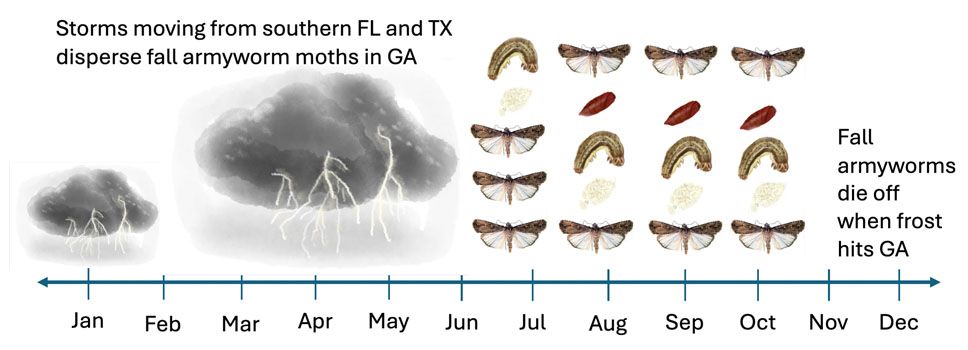
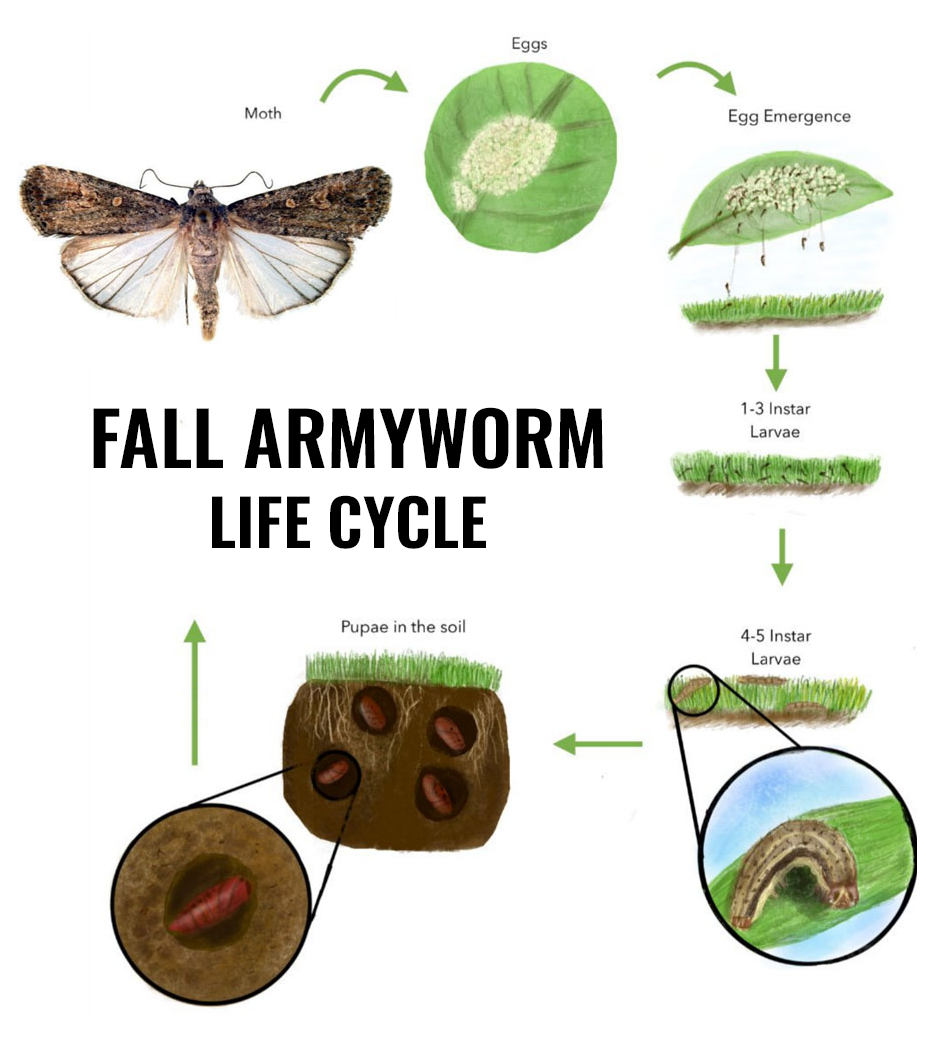
FALL ARMYWORM: LIFE CYCLE AND IDENTIFICATION
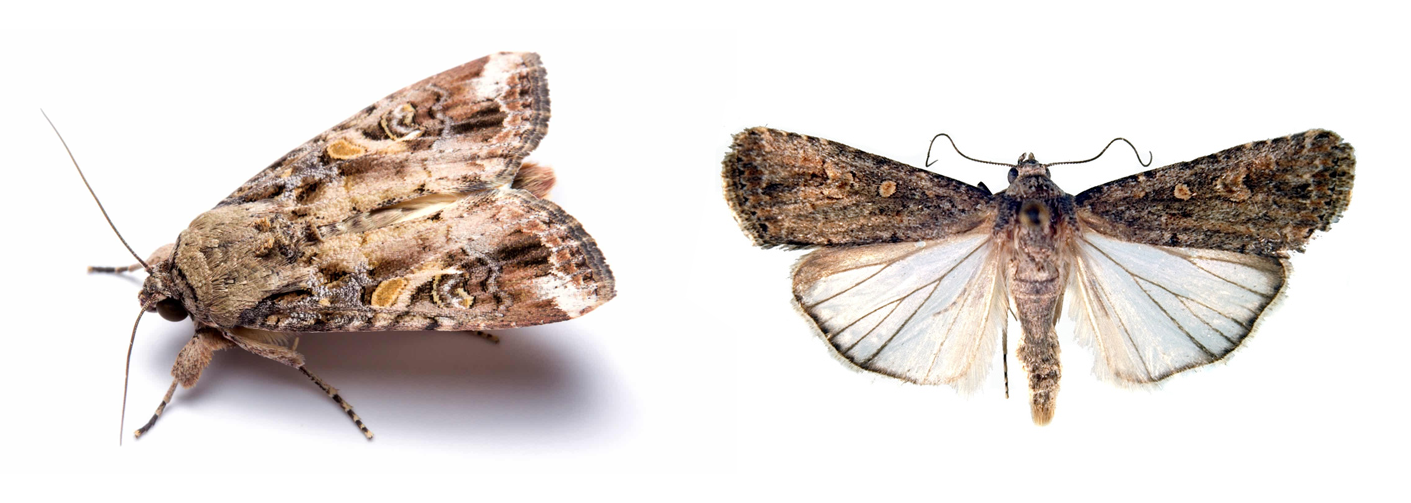
ARMYWORM MOTH
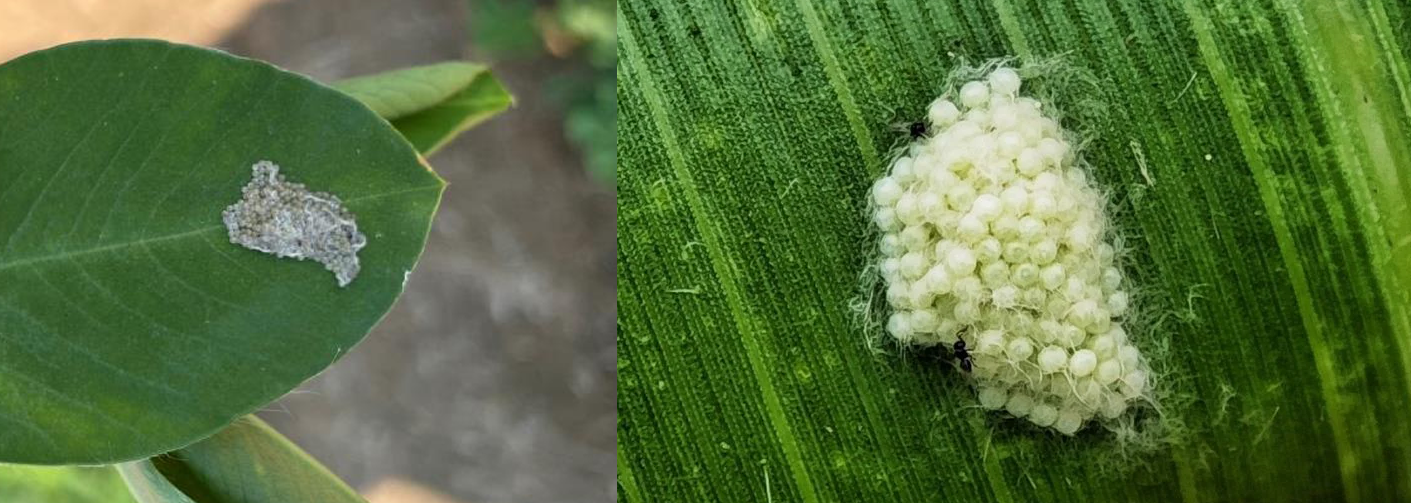
ARMYWORM EGG MASS
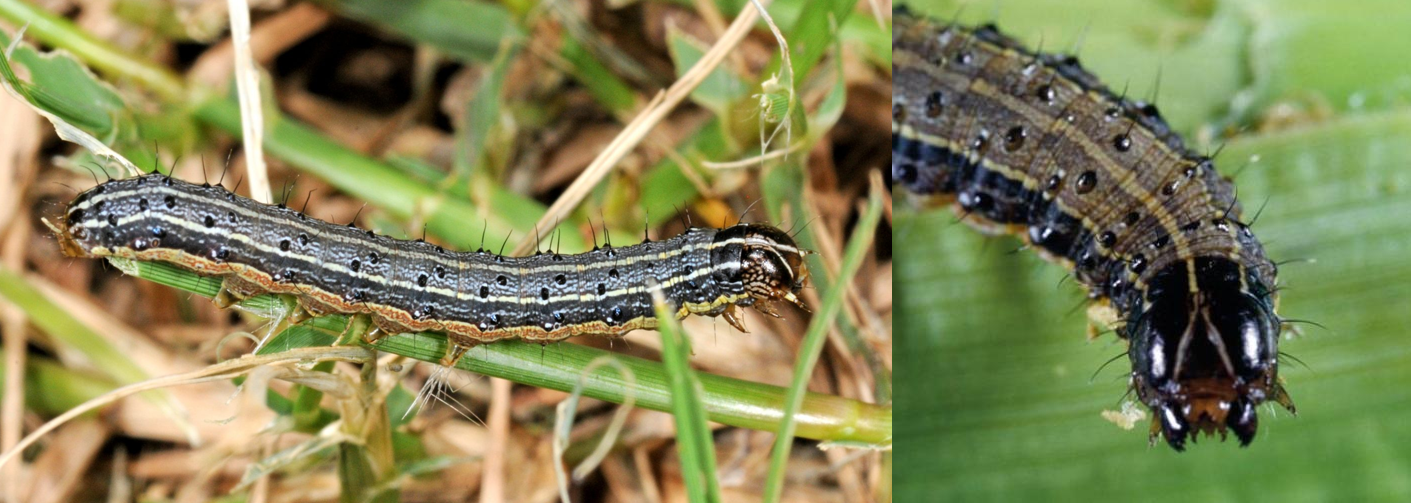
ARMYWORM CATEPILLAR (LARVAE)
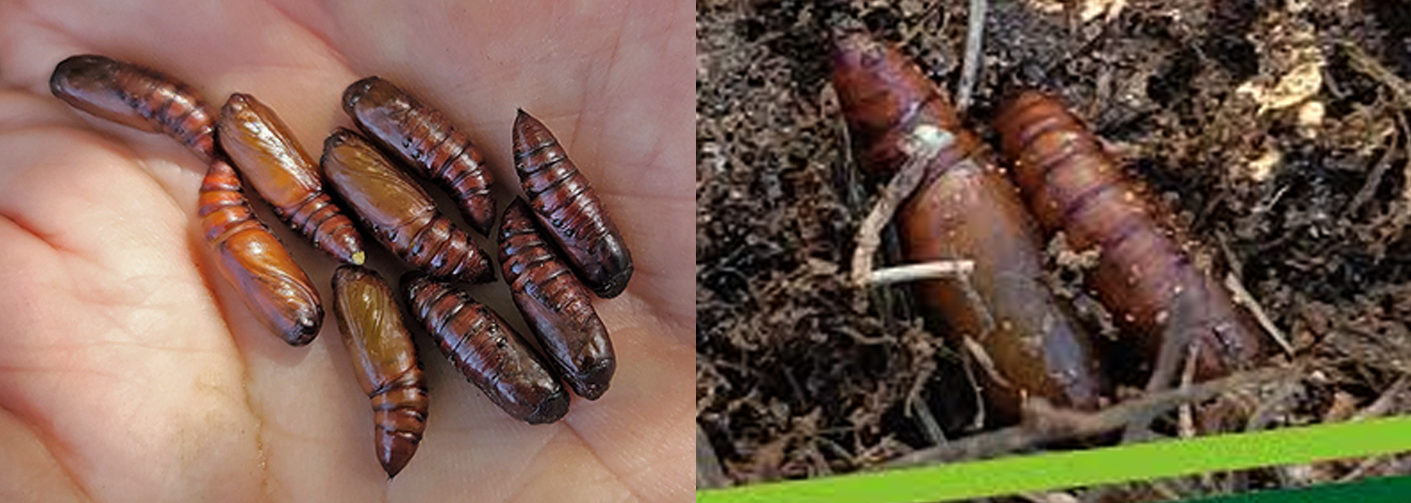
ARMYWORM PUPAE
For more detailed information on identifying
fall armyworms, please click here.
The life cycle of the fall armyworm is 30 days during the summer, but 60 days in the spring and autumn. The moths are active at night, and after mating, they lay eggs in batches (called egg masses). The moths lay eggs on any surface or structure near a lawn—fences, poles, exterior walls, trees, plants, etc. All eggs in each mass hatch at about the same time and within 2–3 days.
The hatched caterpillars (larvae) aggregate for some time where their eggs were laid, then leave the site using a thin web to lower themselves and land on the turfgrass. Caterpillars must feed on the grass within a few hours after their eggs hatch, and young caterpillars remain inside the turfgrass canopy and feed on grass blades, mostly at night.
Late-stage caterpillars are aggressive feeders and are active during both the day and night. In the summer, they take 2 to 3 weeks to reach the pupal stage. The fifth-stage caterpillars drop from leaves onto the soil surface, and then they bore into the soil for pupation.
In this inactive and nonfeeding stage, dark brown pupae remain in the soil for a little over a week before emerging as moths. After a week, the newly emerged adults mate and start laying eggs again. During the summer months in Georgia, one generation (from egg to moth) is completed within 4 weeks.
ARMYWORM IDENTIFICATION
Moths: Fall armyworm moths are identified by their mottled gray forewings with a white spot near the tip and center—which is more prominent in males—and white hindwings. They are relatively small, with a wingspan of about 1 to 1.5 inches.
Egg Masses: A single fall armyworm egg mass consists of 50–200 eggs and appears as a cottony, fuzzy patch on a surface. (FYI: If you see 10 egg masses near a lawn, approximately 1,000 fall armyworm caterpillars will be available to infest that lawn.)
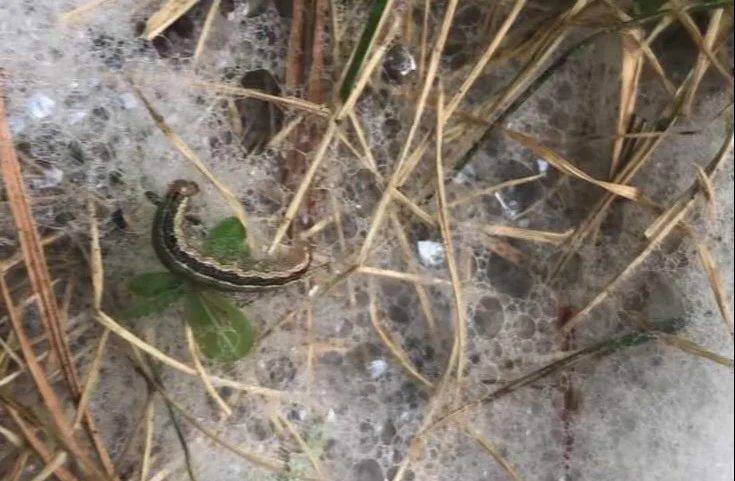
Caterpillars (Larvae): Fall armyworm caterpillars are approximately 1-1.5 inches long and are identified by a distinct inverted Y-shaped marking on their head capsule, and four prominent black spots arranged in a square pattern on the second to last abdominal segment. They can also be identified by their varied coloration, which can range from green to brown or black, with darker stripes along their sides.
Pupae: After the larvae feed on your lawn for 2-3 weeks, they dig into the soil and pupate, typically about an inch deep. Armyworm pupae are typically .5–.75" long and are reddish-brown in color. The pupal stage lasts about 8 to 9 days in the summer. Within two weeks, a new population of moths emerges. At the moth stage, they are not a threat to your lawn.
HOW TO TEST FOR FALL ARMYWORMS
SO, HOW DO YOU KNOW IF YOUR LAWN IS INFESTED WITH ARMYWORMS?
BROWN AND DYING TURFGRASS
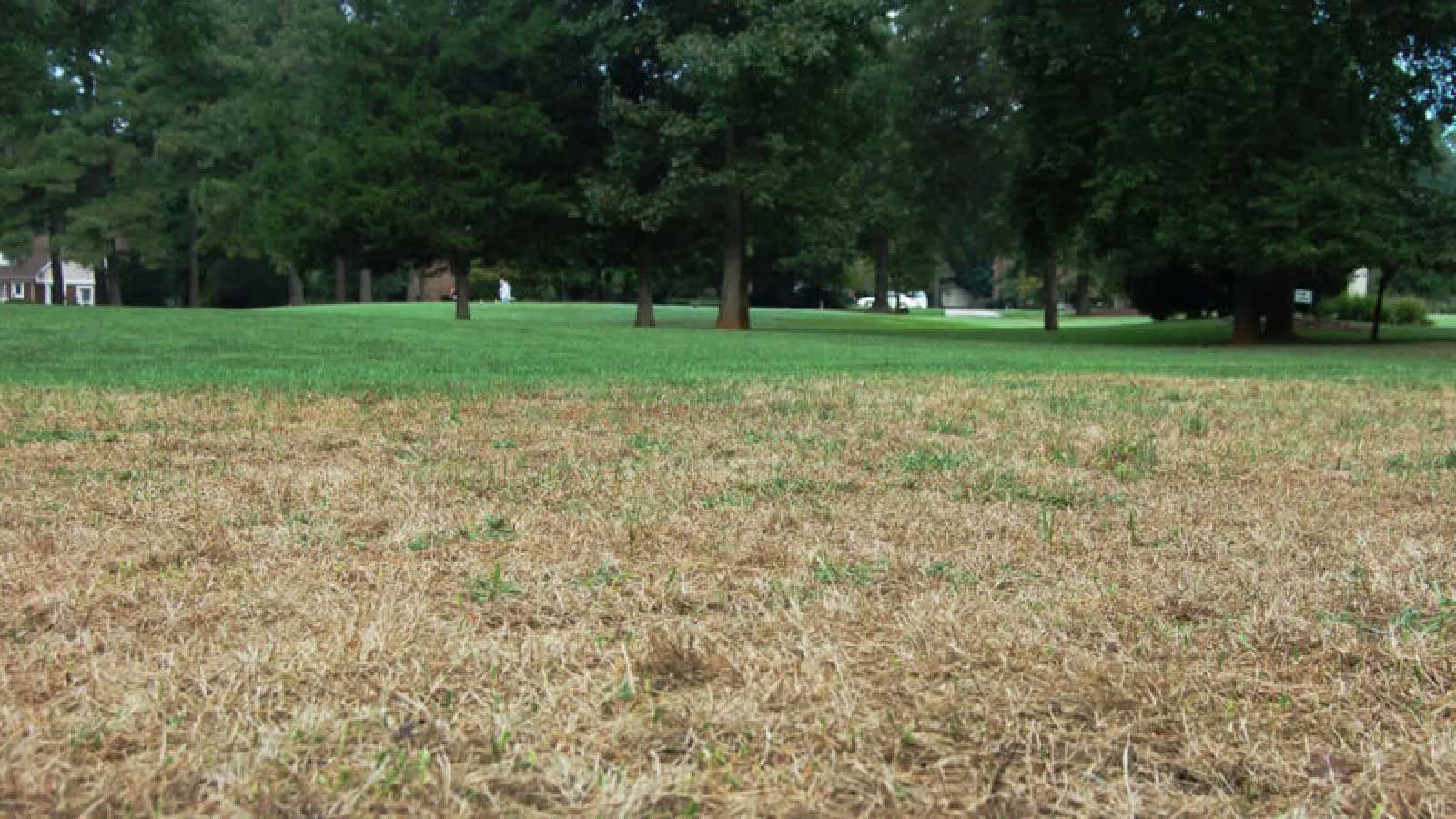
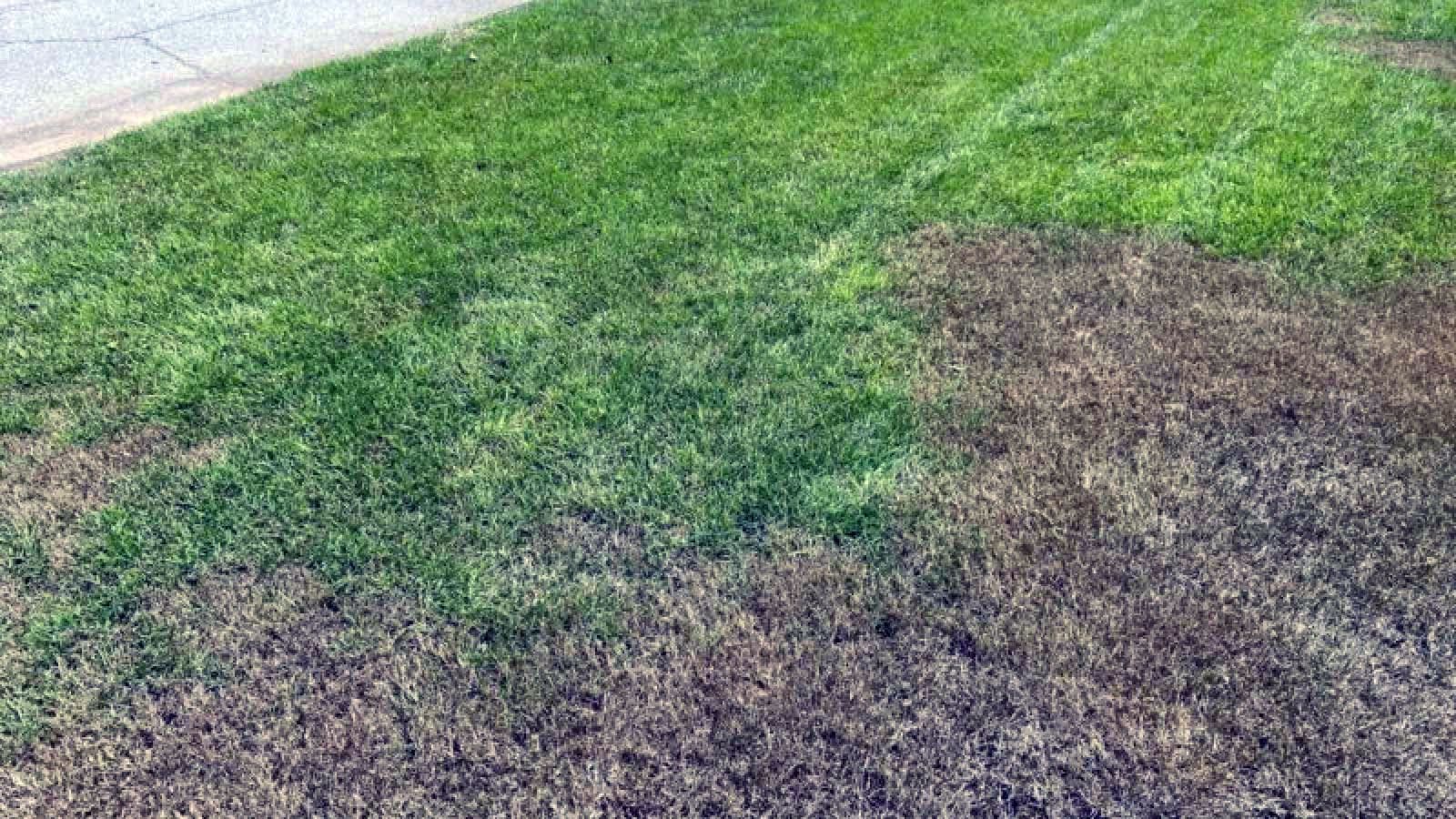
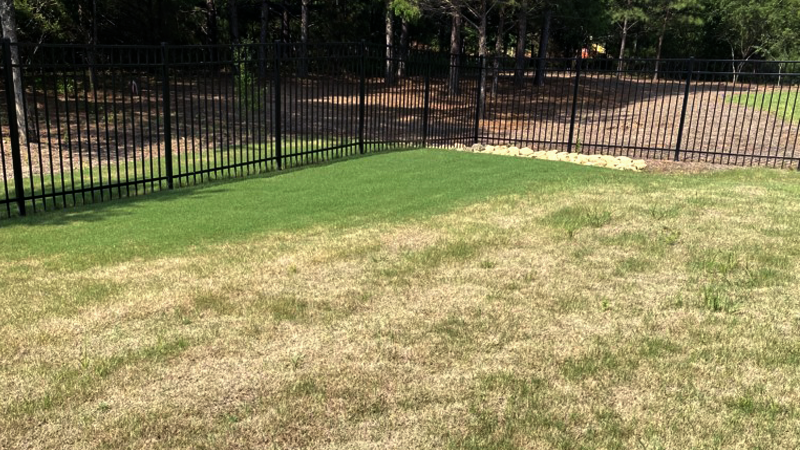
If your grass has become discolored, looks like it has been exposed to frost, or looks like it is dying, you could have an armyworm infestation. (See examples of fall armyworm damage on the right.) The damage to your turfgrass often appears in a side-to-side pattern, beginning on one side of your lawn and then quickly moves across to the other side. This happens because the larvae hatch on one side of your lawn and then "march" like an army across your lawn, eating your turfgrass. In other cases, armyworms can infest your lawn and the damage is not uniform. If you can't easily see the armyworm larvae (caterpillars) in your turfgrass, it's best to do a soap flush test to see if there's an infestation. Read how, below.
A BIRD BUFFET
Another sign of an armyworm infestation is the presence of a large number of birds in the turf area, since armyworms are an excellent food source for birds.
IDENTIFY TURFGRASS PESTS USING THE SOAP FLUSH TEST
Identifying an insect infestation in lawns is often a time-consuming process. Because some of the most damaging pests rarely make an appearance above the soil, it can be challenging to detect an issue before your lawn experiences major symptoms.
The best solution for detecting pests is the soap flush test—a very simple yet effective method for spotting insects in lawns. As the name suggests, the soap flush test requires a mixture of dish detergent and water that can be used for monitoring both small and large areas of lawn. Once applied to grass, the soap will irritate any insects in the soil, forcing them to emerge to the surface.
Other than identifying armyworms in your turfgrass, the soap flush test is an effective test for identifying multiple types of damaging insects, including chinch bugs, mole crickets, annual bluegrass weevils, cutworms, bluegrass billbugs, sod webworms, and grub worms. More importantly, using the soap flush test can help you understand the type of insect you’ll be dealing with, so you can buy the most effective insect control product for that particular infestation and not waste time and money.
Scroll down for step-by-step instructions on how to successfully perform a soap flush test.
HOW TO SUCCESSFULLY PERFORM A SOAP FLUSH TEST
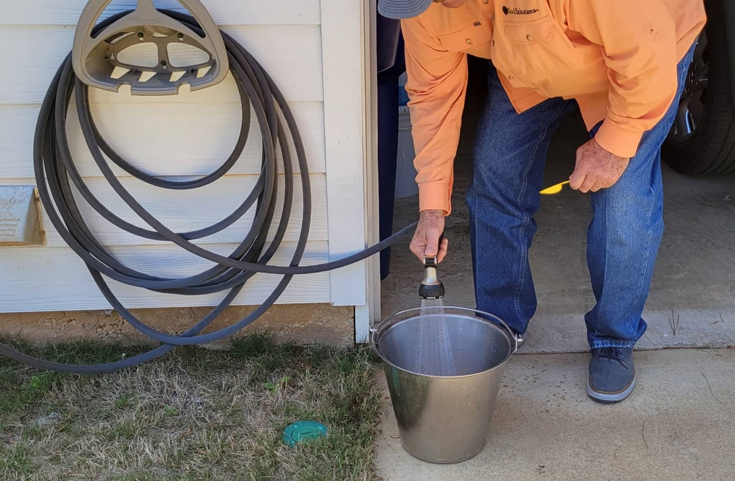
Performing the soap flush test is a fairly simple process that takes only 5–10 minutes. The most common techniques for applying the soap solution include using a watering can, a hose-end sprayer, or a small container such as a bucket. The following steps include the instructions for preparation as well as the procedure for application.
STEP 1: PREPARE THE SOLUTION
Before preparing the solution, determine whether you’ll be monitoring a small or a large section of your lawn. For small areas (typically 1 sq. yd. of grass), add 2 ounces of liquid dish detergent to 1 gallon of water, then mix the solution until soap suds appear. Liquid dish soaps such as Lemon Joy, Ultra Dawn and Ivory Clear are excellent options as they cause the least damage to turfgrass—and experts claim that lemon-scented dish soap works the best. If you plan on monitoring a large section of your lawn, prepare at least 1 gallon of a solution containing two parts water to one part liquid dish detergent. (IMPORTANT NOTE: More soap isn't better! Soap solutions with higher ratios than what's recommended here can cause serious damage to your turfgrass. Remember, too, that applying the solution to a smaller area of the lawn allows the mixture to be more concentrated in that spot, so be careful with both the correct soap-to-water ratio and the surface area you're testing.)
STEP 2: APPLY THE SOLUTION
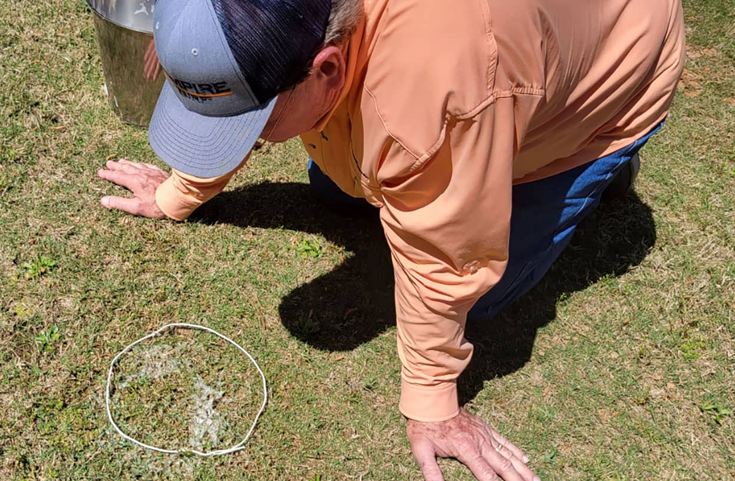
After mixing the solution until soap suds appear, the next step is applying it to your lawn. As previously mentioned, you may use either a small container, such as a watering can, bucket, or a hose-end sprayer. (Hose-end sprayers are the best option for covering a large area of lawn.) Once the soap solution is applied to your lawn, get on your hands and knees to look for insects to appear. It may take a few minutes. Insects in your turfgrass need air, and the soap mixture is an irritant.
Hints for a successful soap flush application:
- Pour the solution around the border of the good grass and along the border of the damaged area of your lawn. Don’t pour the soap solution into the brown grass that’s already damaged because insects won’t be as active in those areas. (Once insects have damaged one area of the lawn, they generally move to other nearby areas to continue feeding on actively growing grass.)
- If the soap flush test doesn't flush out any armyworm larvae, try it again under different circumstances, such as trying it at a different time of day.
- Depending on the species and population, insects should emerge 5–10 minutes after application. Some insects, such as sod webworms, may not appear for 15 minutes.
- Aside from fall armyworms, the following insects are the most common pests you can identify with the soap flush test: Chinch bugs, mole crickets, annual bluegrass weevils, cutworms, bluegrass billbugs, sod webworms, and grub worms. It’s normal to see more than one type of insect when you perform a soap flush test, including many beneficial insects like pincher bugs/earwigs, which are predators for harmful chinch bugs. These beneficial insects don’t harm your turfgrass in any way.
FALL ARMYWORM TREATMENT AND AFTERCARE
TREATING FALL ARMYWORMS IN YOUR TURFGRASS
Applying the most effective chemicals to treat your turfgrass and eliminate fall armyworms (and other destructive insects) requires a chemical license in the State of Georgia and is performed by companies that specialize in treating turfgrass. Brown Brothers recommends that you hire a chemical company (see two recommendations, below) to treat any damaging insects in your turfgrass. These companies are experts in identifying pests and other diseases in your lawn, and will not only guarantee each application, but can also set you up on a regular schedule to apply customized fertilizers and chemicals that prevent and control weeds.
If you enjoy caring for your lawn yourself, bear in mind that there are no "over-the-counter" preventative treatments available to homeowners for fall armyworms in the egg, pupa, or moth stages. However, there are insecticides available to homeowners that will treat armyworm caterpillars (larvae)—the stage when armyworms are eating and damaging your turfgrass. One type is preventative and one is curative, and it's recommended that you contact your County Extension office (below) for more information on the correct chemicals to use and how to apply them. Your County Extension office can also help you identify other insects and diseases in your turfgrass, recommend specific chemical and fertilizer treatments, and help with soil testing.
NOTE: Treat your turfgrass early in the morning or late in the afternoon when the armyworms are most active. If applied midday, the armyworms may be below the surface of the turfgrass and the application will not be as effective.
Also, if you live in an area prone to armyworm infestations, stock up on your preferred insecticide, so you'll be prepared to defend your yard with treatment when necessary. (In 2021, the widespread infestation of fall armyworms caught many homeowners by surprise. There was a limited supply of insecticide available in Georgia, and it was difficult to find and purchase—so be prepared to stock up, just in case!) Finally, make sure to read all of the instructions on the insecticide carefully and apply at the application rate recommended on the product label for the pest you are targeting.
AFTERCARE AND RECOVERY
WARM SEASON TURFGRASS: The good news is that, in most cases, warm-season lawns will recover from an armyworm infestation. Fall armyworms don't eat stolons and rhizomes of warm season turf and growth will resume from those resilient plant parts. After you've applied curative insecticide treatments and if it's been four weeks since you fertilized, it's recommended that you apply a good 5-10-30 fertilizer with Acelepryn insecticide to your lawn to give it a boost in regrowth and provide preventative protection. Also, thoroughly water your lawn until it greens back up. This is important for established sod, but it is especially important for new sod that does not have the root structure in place to help it recover. Water, water, water!
TALL FESCUE: While warm-season grasses, given proper care, will typically recover from armyworm damage, damage to tall fescue is often much more significant. Tall Fescue lawns simply do not have the same tolerance to fall armyworm activity, particularly if it is not very well established. As a result, the damage in tall fescue often requires overseeding or re-sodding in order to repair the damage. A new lawn can go from fine one day, to a complete loss in as little as 24 to 48 hours. Tall fescue users cannot take the fall armyworm threat too lightly!
No matter what type of turfgrass you have, it's recommended that you stay vigilant and treat your turfgrass for an armyworm infestation more than once. Just because the armyworms have gone to the pupae stage, it does not mean they are gone. They will mature, lay eggs, hatch, and infest your yard again, so treat your turfgrass multiple times
according to the insecticide instructions to break the armyworm life cycle.
RECOMMENDED CHEMICAL COMPANIES
Arbor-Nomics Turf, Inc.
651 Langford Dr. NW
Norcross, GA 30071
Arbor-Nomics Turf, Inc.
651 Langford Dr. NW
Norcross, GA 30071
COUNTY EXTENSION OFFICES
Barrow County Extension
90 Lanthier Street, Suite B
Winder, GA 30680
https://extension.uga.edu/county-offices/barrow.html
770-307-3029
Gwinnett County Extension
750 South Perry Street, Suite 400 Lawrenceville, GA 30046
https://extension.uga.edu/county-offices/gwinnett.html
678-377-4010
Jackson County Extension
255 Curtis H. Spence Drive
Jefferson, GA 30549
https://extension.uga.edu/county-offices/jackson.html
706-367-6344
REFERENCES
Braman, S. K., Duncan, R. R., Hanna, W. W., & Engelke, M. C. (2004a). Integrated effects of host resistance and insecticide concentration on survival of and turfgrass damage by the fall armyworm (Lepidoptera: Noctuidae). Journal of Entomological Science, 39(4), 584–597. https://doi.org/10.18474/0749-8004-39.4.584
Braman, S. K., Duncan, R. R., Hanna, W. W., & Engelke, M. C. (2004b). Turfgrass species and cultivar influences on survival and parasitism of fall armyworm. Journal of Economic Entomology, 97(6), 1993–1998. https://doi.org/10.1603/0022-0493-97.6.1993
Khan, F. Z. A., & Joseph, S. V. (2022). Assessment of predatory activity in residential lawns and sod farms. Biological Control, 169, 104885. https://doi.org/10.1016/j.biocontrol.2022.104885
Khan, F. Z. A., & Joseph, S. V. (2024). Influence of short-term, water-deprived bermudagrass on Orius insidiosus predation and Spodoptera frugiperda larval survival and development. Biocontrol Science and Technology , 34(2), 189–202. https://doi.org/10.1080/09583157.2024.2317124
Nagoshi, R. N., Meagher, R. L., & Hay-Roe, M. (2012). Inferring the annual migration patterns of fall armyworm (Lepidoptera: Noctuidae) in the United States from mitochondrial haplotypes. Ecology and Evolution, 2(7), 1458–1467. https://doi.org/10.1002/ece3.268
Potter, D. A., & Braman, S. K. (1991). Ecology and management of turfgrass insects. Annual Review of Entomology, 36, 383–406. https://doi.org/10.1146/annurev.en.36.010191.002123
Singh, G., Waltz, C., & Joseph, S. V. (2021). Potassium and nitrogen impacts on survival and development of fall armyworm (Lepidoptera: Noctuidae). Journal of Entomological Science, 56(4), 411–423. https://doi.org/10.18474/JES20-58
Sparks, A. N. (1979). A review of the biology of the fall armyworm. Fla. Entomol., 62, 82–86. https://doi.org/10.2307/3494083